
Featured Books
The Gentling of Hanna Johansen: A Betrayal of Trust
Author: Charles A. Coleman and Hannah Johansen
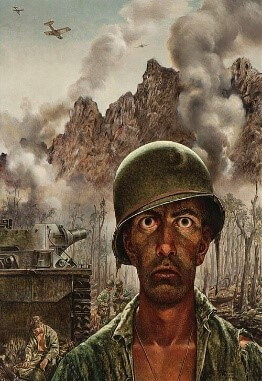
Reviewers are praising The Gentling of Hanna Johansen: A Betrayal of Trust as a first-in-its-class contemporary literary masterpiece because it functions as a highly experimental, co-authored, multi-narrative-driven psychological study that brilliantly tackles several modern mental health crises. Written as a unique collaboration between Dr. Charles Coleman—author of the acclaimed cult-classic PTSD-novel Sergeant Back Again—and Dr. Andy Collins and his fifteen-and-a-half year old granddaughter, Hanna Johansen (the actual victim of “the betrayal of trust”!)—this book is celebrated for transforming a clinical examination of traumatized human psyches into a deeply intimate, emotional literary drama written in a superbly inventive style.
Key Themes
01.
Trauma & PTSD
The essay explores how war continues long after the battlefield ends, affecting veterans through memory, guilt, loss, and psychological injury.
02.
Two Perspectives, One War
American and Vietnamese experiences are contrasted to reveal how different sides of the same conflict can produce profoundly different narratives.
03.
Memory & Storytelling
Both novels use recollection and fragmented memories to reconstruct the reality of war.
04.
Hearts and Minds
The essay questions military, political, and personal interpretations of “winning hearts and minds” during and after conflict.
04.
Develop
05.
Deploy
06.
Deliver
What makes The Gentling of Hanna Johansen: A Betrayal of Trust so remarkably exceptional in the literary genre of contemporary psychodrama?
Critical acclaim and reviewer consensus focus on several key, unique stylist inventions:
A Metaphor for the Modern Mental Health Pandemic
- Uniquely American Adolescent Trauma: The authors use the text to define the evolution of what they call the “uniquely American adolescent psychotype”.
- The Victim as Metaphor: Hanna is merely a metaphor for the toxic contagion of mental illness, which is growing to pandemic levels; indeed, the book frequently refers to a post-Vietnam War mental health crisis, and looking at the world now it is difficult to argue with this. But with the advent of social media, and the globally-reaching influence of peer pressure, as fuel for increasingly catastrophic rhetoric in the development of young people, it’s looking increasingly likely to have laser-focused the long-foreseen crisis on a much later generation. Indeed, Hanna’s story of betrayal is a thoughtful choice for how the overall message of generational trauma is imparted; after all, there are many young girls like Hanna. This novel represents what a tremendously relevant way to do so!
- The “Toxic Contagion” of Social Media: Reviewers praise how the book links historical post-Vietnam War PTSD crises to the modern era, demonstrating how global propaganda, instant peer pressure, and predatory online influencers act as fuel for catastrophic rhetoric in young people which establishes the direct relationship between combat-related PTSD and civilian.
- Deliberate Narrative Structure: Hanna herself does not explicitly appear until roughly a quarter of the way through the book. Critics note this clever pacing serves to position her not just as an individual, but as a universal symbol for thousands of young girls facing identical contemporary psychological challenges.
Deep Investigation of the Human Psyche
- Innovative Semi-Fictional Format: Readers note that despite its hyper-realistic academic accuracy, the book maintains a gripping, deeply satisfying narrative flow.
- A Ray of Hope: Even while navigating devastating psychological landscapes, reviewers write that a profound message of love, renewed trust, and despairing hope remains an anchoring force—even if that light ultimately comes too late or too dim To achieve the distinct, modern, and chillingly realistic multi-author, multi-media “tele-psychiatry” style of The Gentling of Hanna Johansen: A Betrayal of Trust, Dr. Charles Coleman and Dr. Andy Collins rely on an intricate blend of postmodern and classical literary devices. By intentionally blurring the lines between clinical documentation and dramatic fiction, they structure the novel like an active psychological case file in a totally unprecedented manner.






1. Masterful Balance of Dark and Light
- Innovative Semi-Fictional Format: Readers note that despite its hyper-realistic academic accuracy, the book maintains a gripping, deeply satisfying narrative flow.
- A Ray of Hope: Even while navigating devastating psychological landscapes, reviewers write that a profound message of love, renewed trust, and despairing hope remains an anchoring force—even if that light ultimately comes too late or too dim To achieve the distinct, modern, and chillingly realistic multi-author, multi-media “tele-psychiatry” style of The Gentling of Hanna Johansen: A Betrayal of Trust, Dr. Charles Coleman and Dr. Andy Collins rely on an intricate blend of postmodern and classical literary devices. By intentionally blurring the lines between clinical documentation and dramatic fiction, they structure the novel like an active psychological case file in a totally unprecedented manner.
The primary literary devices utilized to construct this masterful storytelling style include:
- Epistolary Framework via Mixed-Media Artifacts
The backbone of the “tele-psychiatry” aesthetic is an updated, high-tech variation of the traditional epistolary format. Instead of standard letters, the text is stitched together through multi-media artifacts that mirror a digital psychiatric investigation via live ZOOM sessions, text messages and verbatim iPhone conversations.
- Transcripts and Tele-Logs: Long sequences are presented as transcribed video calls, phone conversations, and remote tele-psychiatry sessions between Dr. Alexa Muybridge, Hanna, and family members.
- Clinical Records: The insertion of official intake notes, psychiatric diagnostic forms, and case evaluations forces the reader out of a traditional prose mindset and into the role of a clinician, making Hanna your daughter, your patient, your responsibility.
- Digital Footprints: The integration of text messages and social media fragments illustrates the “toxic contagion” of Hanna’s online world, altering the pacing to reflect rapid-fire digital communication that forms the unique adolescent American psychotype in the living form of Hanna Johansen.
2. Polyphony (Multi-Voiced Narrative)
The text relies heavily on polyphony, a device where multiple, distinct narrative voices hold equal weight and authority without a single, definitive “all-knowing” narrator. Shared narrative input balances the objective correlative of the traumatized characters: they get to speak for themselves in this totally unique interactive style.
- The Clinical Voice: Dr. Muybridge provides an objective, analytical, and highly professional perspective in relating to both Hanna and, not so coincidentally, with Andy Collins, who also becomes her patient.
- The Academic/Familial Voice: Papa Andy Collins injects deep historical context, mixing psychological theory as a guide through the darkness of intimate family grief.
- The Triple-Author Layer: Because the book is a literal collaboration between Coleman, Collins and Johansen, the text carries an authentic, organic friction between three different writing styles making the “multi-author” narrative feel literal rather than contrived. This is an example of the genius behind the intersecting character arcs.
3. Frame Narrative and Delayed Exposition
The authors utilize a nested frame narrative (a story within a story) combined with aggressive delayed exposition to build psychological tension.
- By deliberately withholding Hanna’s actual presence until a quarter of the way through the book, the authors use the surrounding characters’ collaboration to construct a psychological ghost of Hanna.
- The reader is forced to build a mental profile of Hanna entirely through the clinical perspectives of others before ever hearing her speak, mimicking the exact process a consulting psychiatrist goes through when taking on a complex remote case.

4. Verisimilitude through Academic Nomenclature
To ensure the dramatic fiction reads like a gripping real-world document, the authors employ an intense level of verisimilitude (the appearance of truth) through the precise deployment of medical and psychological jargon.
- Rather than using vague emotional terms, the dialogue and prose are anchored in the specific language of trauma, military PTSD, adolescent psychotypes, and behavioral loops.
- This technique strips away the “coziness” of traditional fiction, making the stakes feel dangerous, clinical, and immediate.
5. Juxtaposition and Ideological Foil
The entire thematic weight of the book hinges on the juxtaposition of two distinct eras of trauma. The authors set up a brilliant literary foil by placing historical, post-Vietnam War combat PTSD directly alongside modern, internet-driven adolescent psychological trauma and intimate physical trauma. By filtering both through remote tele-health screens and recorded conversations, the interactive texts highlight how social media, technology, and psychological damage manifests itself across generations, using historical and structural contrast to show that while the theoretical and practical approaches to providing care to veterans vs civilians may differ, the core human fractures are identical.